Hex Rivet Nuts for Sheet Metal | Hebei Wotu Fastener Manufacturing Co., Ltd.

Hex rivet nuts for sheet and tube assemblies

A hex rivet nut gives a sheet, tube or enclosed section a reusable internal thread when the back side is hard to reach. The main purchase decision is not only thread size; the body shape, grip range, head style, material and installation method all affect whether the insert resists spinning and sits correctly in the parent material.

For thin metal fabrications, cabinets, frames, appliances and similar assemblies, the hex body can be a useful anti-rotation feature when the host hole is prepared to match it. If the hole is round, a hex rivet nut may not deliver the same benefit unless the design and tooling are matched to the application.

Related Products

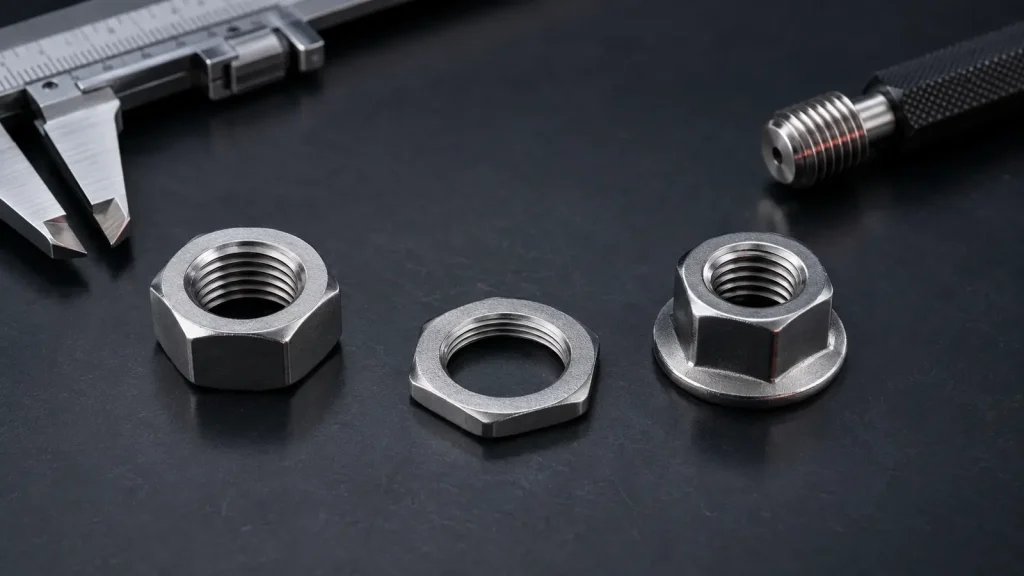
Hex nut DIN934-1987 (A/B accuracy classification)

Hex nut DIN934-1987 (A/B accuracy classification)

Brand: Wotu Standard basis: German standard DIN934-1987, metric coarse thread/fine thread universal thread Surface: 304 stainless steel Specifications: M6~M24 full range of specifications Supporting equipment: same specification bolts, flat washer, spring washer complete set of shipment Packaging: 25kg standard carton, whole wooden pallet packaging

Read More
Hex thin nut

Hex thin nut

Brand: Wotu Surface: zinc plated Specifications: in stock M8~M64 full standard specifications, covering precision, machinery, and steel structure full size range, supporting nonstandard tooth pitch and customized thickness Matching: Can be matched with bolts of corresponding specifications, flat washer, spring washer complete set of shipment Packing: packed in 25kg cartons and packed on wooden pallets.

Read More
Hex nut (Chinese national standard GB52-1976)

Hex nut (Chinese national standard GB52-1976)

Brand: Wotu Surface: 304 stainless steel Specifications: in stock M6~M24 full standard metric specifications, supports nonstandard pitch, thickening/customized Matching: Can be matched with bolts of corresponding specifications, flat washer, spring washer complete set of supporting shipment Packaging: 25kg cartons, whole wooden pallets

Read More
Hex flange nut (Chinese national standard GB/T6177.1-2000)

Hex flange nut (Chinese national standard GB/T6177.1-2000)

Brand: Wotu Surface: zinc plated Specifications: in stockM6/M8/M10/M12/M14/M16/M20 Chinese national standardfull range of specifications, support nonstandard thickness, tooth pitch customized Matching: can be matched with bolts of the same specification, flat washer, spring washer complete set of shipment Packaging: 25kg cartons, whole wooden pallets

Read More
Chinese National Standard / German Standard Hex Nut (thick Nuts, Thin Nuts, Flange Nuts, Multiple Categories)

Chinese National Standard / German Standard Hex Nut (thick Nuts, Thin Nuts, Flange Nuts, Multiple Categories)

Brand: Wotu Surface: color zinc plated, blue-white zinc plated, black oxide, hot-dip galvanized, various surface treatments available Specifications: Comply with DIN934, GB/T6170, GB/T6172.1, GB/T6177.1 standards, in stock M6-M64 full range of specifications, support nonstandard customized Packaging: woven bag inside/25kg export carton, full-container wooden pallet wrapped with film, supports private-label, neutral export packaging

Read More
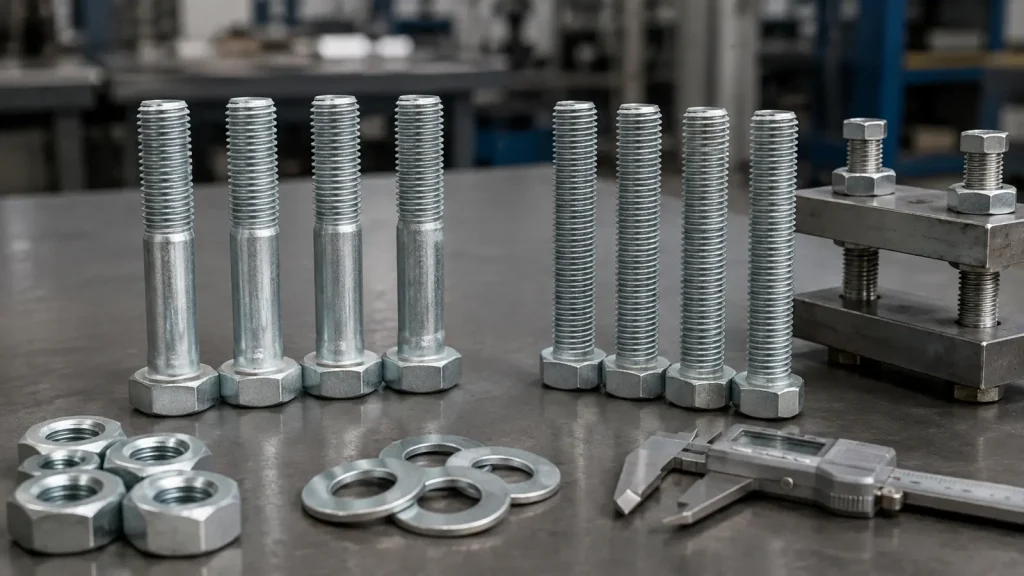
Hot-Dip Galvanized Hex Head Bolt (DIN931 Half Thread / DIN933 Full Thread / GB30 Chinese National Standard Bolt, Can Be Equipped With Nut And Washer Set)

Hot-Dip Galvanized Hex Head Bolt (DIN931 Half Thread / DIN933 Full Thread / GB30 Chinese National Standard Bolt, Can Be Equipped With Nut And Washer Set)

Brand: Wotu Surface: overall hot-dip zinc plating treatment Specifications: Comply with DIN and GB standards, in stock M6-M48 full range of specifications, length 20mm-300mm, supports nonstandard customized. Packaging: woven bag inside / 25kg export carton, film-wrapped wooden pallet; supports neutral packaging and customer private-label customization.

Read More

Hex rivet nut selection points for sheet and tube assemblies

Selection criteria

Relevant selection points for a hex rivet nut include thread size, body length, grip range, head form, material, finish, hole preparation and installation tooling. The best choice is the insert that clamps securely without distorting the workpiece and still gives enough thread engagement for the mating screw.

Criterion What To Check Why It Matters Buyer Tip
Hex body shape and anti-rotation fit Compare the rivet nut’s external hex profile with the prepared hole and the panel material. A matching hex profile helps resist spinning during tightening, while a poor fit can damage the hole or weaken the joint. Ask for the required hole dimensions and confirm whether samples can be checked in the actual panel.
Internal thread size and standard Match the thread diameter, pitch, and thread standard to the bolt or screw used in the assembly. An incorrect pitch or standard prevents proper engagement and can cause cross-threading or assembly delays. Send the mating fastener specification and ask the supplier to confirm thread compatibility on the drawing.
Grip range for the panel Compare the rivet nut’s stated grip range with the total thickness of the joined material, including coatings or washers. The insert must deform in the correct position to clamp the panel securely; an unsuitable range can leave looseness or insufficient retention. State the minimum and maximum material thickness, then ask which size is recommended for both limits.
Material and surface finish Confirm the base material and finish against the panel material, service environment, and required appearance. Material and coating affect corrosion compatibility, installation behavior, and long-term suitability in exposed assemblies. Ask which finish options are available and whether the supplier can provide material or coating documentation for approval.
Installation method and tool access Check whether the insert suits the available manual, pneumatic, or battery tool and the assembly’s access limitations. A rivet nut that needs an unsuitable mandrel or difficult access can slow production and lead to inconsistent installation. Provide the tool type, mandrel details, and access conditions, and ask for the recommended installation procedure.

Choosing the right body, head and grip range

The practical difference between a hex rivet nut and a round rivet nut is how each resists rotation after installation. A round body relies mainly on clamp load, knurling or deformation against the hole wall. A hex body can mechanically lock into a hex-shaped hole, which helps when bolts will be removed and reinstalled during service.

That advantage comes with a trade-off: the hole preparation is less forgiving. A poor hex hole, an oversize hole or the wrong grip range can cause loose seating, panel distortion or spin-out during tightening. Buyers should confirm the hole shape, sheet thickness and installation tool before changing from a round insert to a hex insert.

Start with the parent material and access conditions. A rivet nut is often chosen because welding a nut is impractical, the back side is closed, or heat would damage the part. Confirm the sheet or tube thickness range, material hardness and whether the joint will see vibration, repeated service removal or only one-time assembly.

Match the body and head style to the part geometry. A full hex body normally needs a matching hex hole for best anti-rotation performance. A flat head may suit general sheet-metal work, while a countersunk or reduced head may be needed where the fastener must sit flush or near-flush. Avoid choosing the head style by appearance alone; the bearing surface and installed height can change the joint.

Material and surface finish should follow the working environment. Carbon steel, stainless steel and aluminum inserts behave differently in strength, corrosion resistance and galvanic compatibility with the host material. If the assembly is painted, plated or exposed outdoors, ask how the finish will interact with installation deformation and with the mating screw.

The next useful step is to send a small set of application details rather than only a thread callout. Include the thread size, parent material, sheet thickness or grip range, hole shape, head preference, required finish and the screw or bolt that will be used. If the design is not fixed, ask whether a hex body, half-hex body, knurled round body or another insert type is more suitable for the load and production process.


Criteria Importance Description Example Options
Body shape High for anti-rotation performance A full hex body can mechanically lock into a matching hex hole, while round styles rely more on deformation, knurling or clamp force. A removable access cover may benefit from a hex body; a low-load fixed bracket may work with a round knurled insert.
Grip range and parent material thickness Critical for secure setting The insert must collapse and clamp within the actual material thickness. Too short, too long or mismatched grip range can cause loose seating or panel distortion. A thin sheet panel and a thicker box-section wall may need different body lengths even if both use the same thread size.
Head style Important for fit, bearing area and appearance Flat, reduced or countersunk heads change installed height, bearing surface and how the mating part sits against the panel. A flat head may suit general cabinet assembly; a countersunk style may be considered where a near-flush surface is required.
Material and finish Important for corrosion resistance and compatibility Carbon steel, stainless steel and aluminum inserts suit different strength, weight and corrosion requirements. The finish should also tolerate installation deformation and contact with the mating screw. An indoor painted assembly may have different finish needs from an outdoor enclosure or an aluminum panel.
Installation tooling and hole preparation High for repeatable production quality The tool stroke, pulling force and prepared hole must match the insert. Poor hole control or incorrect setting force can damage the workpiece or leave the thread loose. A production line using punched hex holes should confirm insert dimensions and setting method before bulk ordering.

Blog Articles / Reviews

Hex Thin Nut vs Standard Hex Nut: Which Fits Space-Limited or Locking Assemblies?

Hex Thin Nut vs Standard Hex Nut: Which Fits Space-Limited or Locking Assemblies?

Direct Answer: Choose a hex thin nut when reduced nut height is genuinely required by the assembly or when the engineering design specifies it as part of a locking arrangement. Choose a standard hex nut when full nut height, normal thread engagement, and the specified load-bearing function are required. Buyers should compare nut height, thread […]

How Should Buyers Select Chinese and German Standard Hex Nuts?

How Should Buyers Select Chinese and German Standard Hex Nuts?

Direct Answer: Select a hex nut by the exact standard number and edition, thread diameter and pitch, nut style, property class, material, finish, mating bolt and acceptance method. “Chinese standard” or “German standard” alone is not a complete specification. Regular, thick, thin and flange nuts can differ in geometry and load behavior, so buyers should […]

What Should an RFQ Include When Sourcing Dacromet Hex Head Self-Drilling Screw?

What Should an RFQ Include When Sourcing Dacromet Hex Head Self-Drilling Screw?

When sourcing dacromet hex head self drilling screw, a complete RFQ should define the application, screw configuration, coating requirement, dimensions, and supplier confirmation requirements. Buyers often receive different quotations because suppliers may interpret coating, size, drilling capability, or packaging scope differently. Before preparing a project inquiry, buyers can review the available fastener product categories to […]

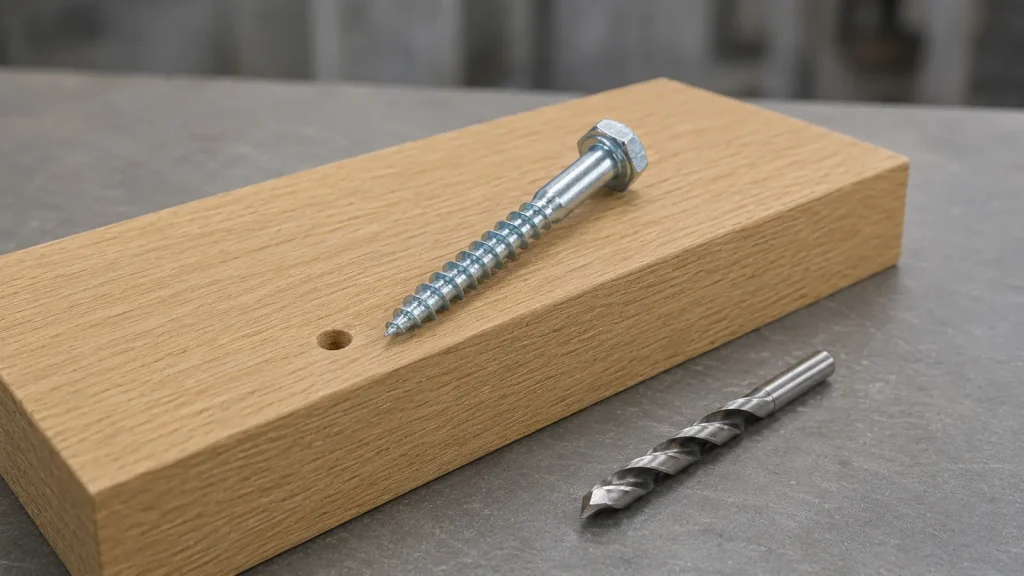
Which Hexagonal Wood Screw Specifications Should Buyers Freeze Before Production?

Which Hexagonal Wood Screw Specifications Should Buyers Freeze Before Production?

A hexagonal wood screw order should not be released from a gauge number and length alone. Before production, the buyer and supplier need one approved specification that fixes the screw diameter, length basis, thread geometry, point, hex-head dimensions, material, finish, installation method, substrate and acceptance evidence. The pilot hole belongs in the application specification as […]

DIN 931 vs DIN 933 Hex Bolts: What Should Buyers Confirm Before Bulk Ordering?

DIN 931 vs DIN 933 Hex Bolts: What Should Buyers Confirm Before Bulk Ordering?

DIN 931-style half-thread and DIN 933-style full-thread hex bolts should not be selected from diameter and overall length alone. The practical choice depends on the joint stack, required grip, location of the thread transition, available nut engagement, mating hardware, material or property requirement, coating system and governing product specification. A half-thread bolt is not automatically […]

What Should Buyers Confirm When Ordering Color Nylon Head Hex Self-Drilling Screws?

What Should Buyers Confirm When Ordering Color Nylon Head Hex Self-Drilling Screws?

When ordering a chinese standard color nylon head hex self drilling screw, the RFQ should define more than a color name. Buyers should confirm the exact color reference, nylon head or cap configuration, base screw diameter and length, steel-sheet condition, metallic screw finish, visible-face requirement, color approval method, batch-consistency check and packaging or SKU separation. […]

Frequently Asked Questions

Where does a hex body make more sense than a round insert?

A hex body is useful where the installed thread may see repeated screw removal, service access or higher risk of rotation in the panel. It works best when the parent part can be punched, laser cut or otherwise prepared with a matching hex hole.

Can it be installed in a round hole?

Not usually with the same anti-rotation benefit. A full hex rivet nut is designed to seat in a matching hole shape; putting it into a round or oversize hole can reduce locking contact and may lead to spin-out during assembly or service.

What is the main trade-off compared with a knurled round rivet nut?

A knurled round rivet nut is often easier to use with standard round holes and may suit simpler production processes. A hex rivet nut can resist rotation more positively, but it requires better control of hole shape, hole size and grip range.

What information should be confirmed before ordering?

Confirm the thread size, parent material, sheet or tube thickness, hole shape, head style, material and finish. It is also helpful to state the mating screw and whether the joint will be opened repeatedly, exposed to vibration or used outdoors.

Does a stronger material always make the better insert?

No. The insert material should match the host material, corrosion environment and installation method. A harder or stronger insert can still perform poorly if it cracks a thin panel, causes galvanic issues or cannot be set correctly with the available tool.

Leave Your Message

Send the thread size, parent material and sheet thickness or grip range. If available, also include the hole shape, preferred head style and surface finish so the inquiry can be checked against the installation conditions.