MS Nut and Bolt Selection | Hebei Wotu Fastener Manufacturing Co., Ltd.

MS Nut and Bolt Selection

MS nut and bolt assemblies are commonly chosen for general fastening in fabricated frames, brackets, machinery supports and maintenance work where mild steel provides a practical balance of cost, machinability and strength. The main purchase decision is not simply the thread size: the bolt grade, nut compatibility, finish and service environment must match the joint.

Before requesting a quotation, define the thread system, diameter and length, required strength level, surface finish and quantity. These details reduce the risk of receiving parts that fit physically but do not suit the load, corrosion exposure or installation space.

Related Products

Hot-Dip Galvanized Hex Head Bolt (DIN931 Half Thread / DIN933 Full Thread / GB30 Chinese National Standard Bolt, Can Be Equipped With Nut And Washer Set)

Hot-Dip Galvanized Hex Head Bolt (DIN931 Half Thread / DIN933 Full Thread / GB30 Chinese National Standard Bolt, Can Be Equipped With Nut And Washer Set)

Brand: Wotu Surface: overall hot-dip zinc plating treatment Specifications: Comply with DIN and GB standards, in stock M6-M48 full range of specifications, length 20mm-300mm, supports nonstandard customized. Packaging: woven bag inside / 25kg export carton, film-wrapped wooden pallet; supports neutral packaging and customer private-label customization.

Read More
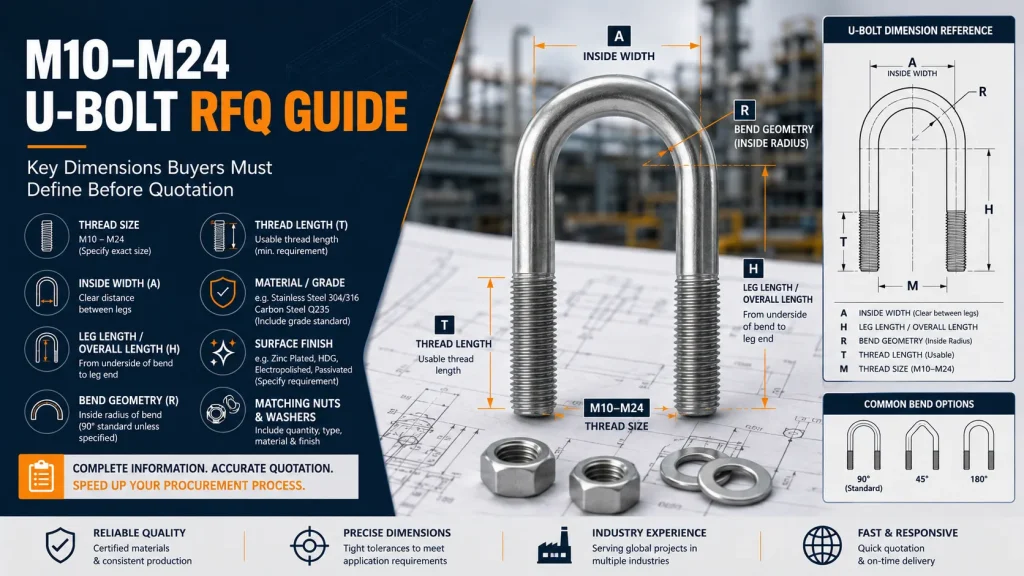
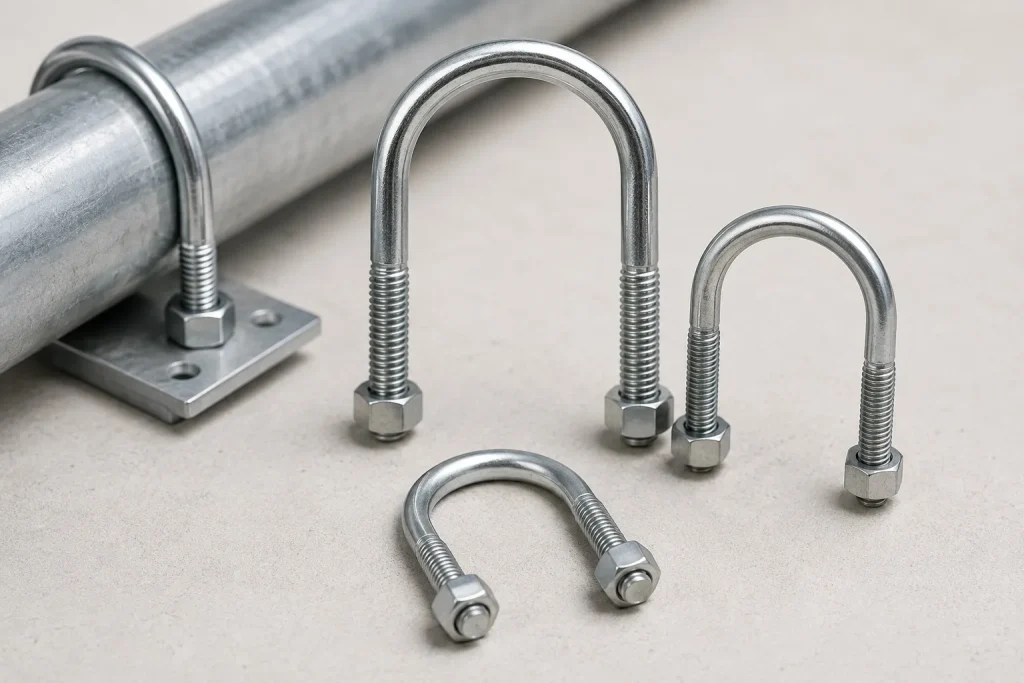
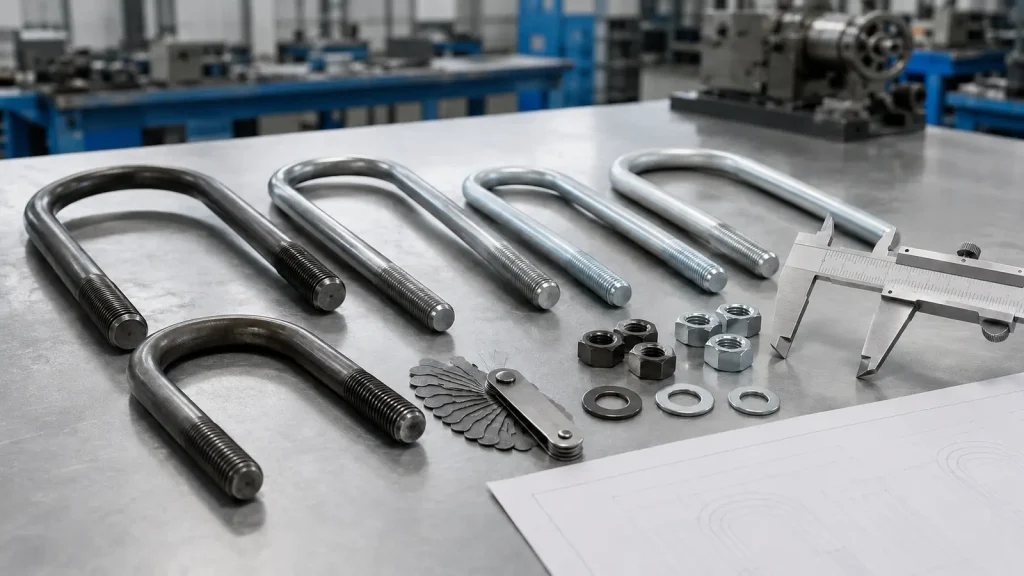
U-bolt ( / U-bolt, M10/M12/M16/M20/M24 multiple specifications)

U-bolt ( / U-bolt, M10/M12/M16/M20/M24 multiple specifications)

Brand: Wotu Surface: natural black oxide / hot-dip galvanized / blue-white zinc plated, multiple processes available Specifications: Based on common industry drawing parameters, suitable for pipe diameter 25mm~139.7mm, screw diameter M10~M24, total length can be nonstandard customized Matching: can be matched with nut, flat washer and spring washer of the same specifications for complete shipment Packaging: Bundling and packaging + 25kg export carton, full-container wooden pallet wrapped with film, supports private-label export packaging

Read More
7-letter, 9-letter L-shaped anchor bolt (Chinese national standard GB/T799-1988 embedded anchor screw)

7-letter, 9-letter L-shaped anchor bolt (Chinese national standard GB/T799-1988 embedded anchor screw)

Brand: Wotu Surface: Natural black oxide treatment, customized hot-dip galvanized, zinc plated as required Specifications: Follow Chinese national standard GB/T799-1988, in stock M12-M48, total length 120mm~1500mm, nonstandard customized diameter, bending length, total screw length available Matching: Nuts, flat washers and spring washers of the same specification can be supplied in complete sets. Packaging: Bundling and packaging, using wooden pallets and film-wrapped export packaging in large quantities

Read More
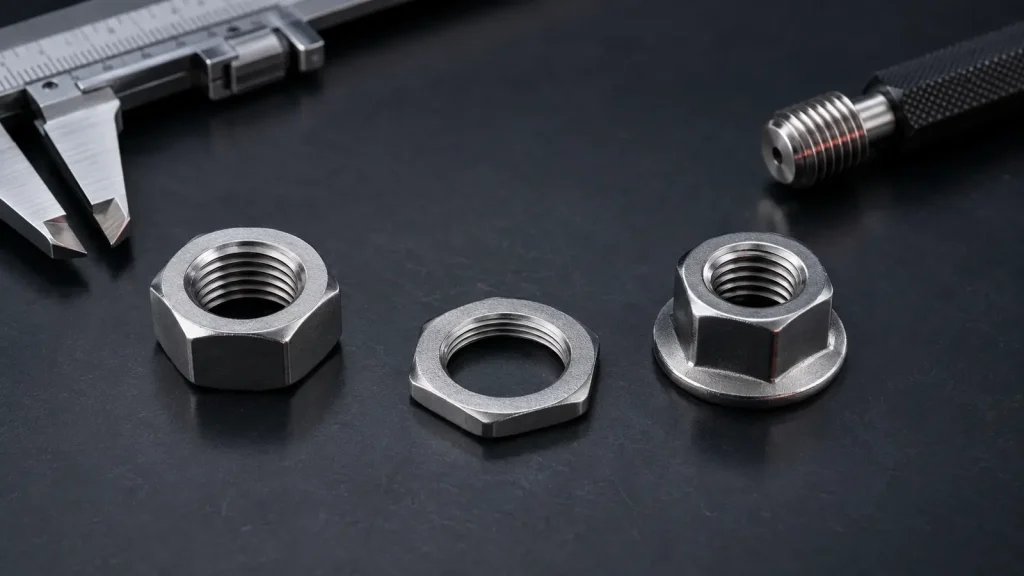
Hex nut DIN934-1987 (A/B accuracy classification)

Hex nut DIN934-1987 (A/B accuracy classification)

Brand: Wotu Standard basis: German standard DIN934-1987, metric coarse thread/fine thread universal thread Surface: 304 stainless steel Specifications: M6~M24 full range of specifications Supporting equipment: same specification bolts, flat washer, spring washer complete set of shipment Packaging: 25kg standard carton, whole wooden pallet packaging

Read More
Hex thin nut

Hex thin nut

Brand: Wotu Surface: zinc plated Specifications: in stock M8~M64 full standard specifications, covering precision, machinery, and steel structure full size range, supporting nonstandard tooth pitch and customized thickness Matching: Can be matched with bolts of corresponding specifications, flat washer, spring washer complete set of shipment Packing: packed in 25kg cartons and packed on wooden pallets.

Read More
Grade 8/Grade 10 High-strength Black Oxide Hex Nut (DIN934/GB Chinese National Standard Thickened Nut)

Grade 8/Grade 10 High-strength Black Oxide Hex Nut (DIN934/GB Chinese National Standard Thickened Nut)

Brand: Wotu Surface: quenching and tempering heat treatment + high temperature black oxide anti-rust treatment Specifications: Comply with DIN934, GB/T6170 standards, in stock M6-M48 full range of specifications, nonstandard sizes can be customized Packaging: 25kg carton/woven bag inner packaging, whole wooden pallet wrapped with film for export packaging, supports neutral/private-label customization packaging

Read More

Compare MS nut and bolt options by fit, strength and finish

MS Nut and Bolt Selection

Compare MS nut and bolt options by thread compatibility, bolt dimensions, strength designation, nut pairing, head and nut geometry, surface finish, washer requirements and the conditions around the joint. A drawing or sample can resolve fit questions more reliably than a short name such as “MS nut bolt.”

Criterion What To Check Why It Matters Buyer Tip
Material and strength grade Confirm what “MS” means for the bolt and nut, including the material designation and applicable strength grade. Material and grade affect load suitability, tightening behavior, durability, and compatibility between the nut and bolt. Ask: “Which material and strength grades will you supply for both parts, and what document identifies them?”
Thread diameter, pitch, and standard Match the nominal diameter, thread pitch, and thread system for the complete assembly. A bolt and nut with different thread forms or pitches will not assemble correctly and may damage the threads. Send the required thread standard and size rather than only saying “MS nut bolt.”
Bolt length, head style, and nut type Verify the bolt length, thread length, head dimensions, and the required nut style against the joint drawing. Incorrect dimensions can leave insufficient thread engagement, excessive protrusion, or inadequate tool clearance. Ask for a dimensional drawing or approval sample before ordering a size range.
Surface finish and service environment Specify the finish required for indoor, outdoor, humid, chemical, or other exposure conditions, and confirm whether the nut and bolt use compatible finishes. The surface treatment affects corrosion resistance, appearance, friction during tightening, and long-term removal. Describe the installation environment and ask which finish is proposed for both components.
Inspection and supply documentation Agree on the documents and checks supplied with the order, such as dimensional inspection or material identification records. Clear records make it easier to confirm that the delivered fasteners match the approved size, material, and order description. Ask which inspection records are available for the specific production batch before placing the order.

Specify the right MS fastening set for the joint

The key distinction is between a general-purpose mild-steel fastener and a higher-strength or corrosion-resistant fastener. MS hardware can be suitable for indoor assemblies and protected equipment, while outdoor, damp or chemically exposed applications may require an appropriate coating or a different material altogether.

Nut and bolt compatibility also matters. Match the nut to the bolt's thread form and strength requirements rather than mixing parts from different specifications. A lower-strength nut, incorrect thread pitch or unsuitable finish can compromise the joint even when the nominal diameter appears correct.

Start with the joint. State what the bolt is joining, whether the load is mainly tension, shear or clamping, and whether the assembly will be removed regularly. Bolt length should account for the material thickness, washers and the amount of thread engagement required; choosing by diameter alone is a common source of rework.

Confirm the standard and thread. Specify metric or inch threads, thread pitch, head style and the dimensional standard required for the project. Do not assume that a bolt described as “M” will fit every metric nut, or that a similar-looking nut from another standard will provide the intended fit.

Choose the finish for the environment. Plain MS fasteners may suit dry, protected applications, while moisture and outdoor exposure call for a finish selected for corrosion resistance. Check whether the coating affects thread fit, assembly method or contact with adjacent metals. For severe exposure, ask whether mild steel remains the right material.

Send a usable enquiry. Include a drawing or clear part description, bolt diameter and length, thread details, nut type, finish, quantity, packaging needs and application environment. Ask Hebei Wotu Fastener Manufacturing Co., Ltd. to confirm available specifications, material or grade documentation, matching nuts and the inspection information supplied with the order.


Criteria Importance Description Example Options
Material choice Important when strength, corrosion exposure or cost drives the decision Mild steel suits many general fastening jobs, but it is not the default answer for every load or environment. Compare it with higher-strength carbon steel or stainless steel when the joint is exposed, safety-related or heavily loaded. A dry indoor equipment cover may use a mild-steel set, while an exposed outdoor bracket may need a protective coating or another material.
Thread compatibility Critical for fit, tightening and joint reliability Nut and bolt diameter alone is not enough. The thread pitch, thread form and applicable standard must match, and the nut should be suitable for the bolt’s strength requirement. Two fasteners described as M12 may not assemble correctly if one uses a different pitch or standard than the matching nut.
Bolt length and engagement High importance for installation quality and avoiding rework Length must account for the parts being clamped, washers, nut height and the required thread engagement. Too short can reduce holding capacity; too long can interfere with nearby parts or waste space. A bracket joint with washers on both sides needs a different bolt length than the same plate thickness assembled without washers.
Surface finish Important when the fastener faces moisture, handling wear or appearance requirements Plain, plated or otherwise coated finishes affect corrosion resistance, thread feel and sometimes dimensional fit. The finish should match the service environment and any mating components. Plain fasteners may be acceptable inside a dry machine frame, while a damp installation may call for a corrosion-protective finish.
Head, nut and washer arrangement Relevant where access, bearing area and assembly method affect performance Head style, nut height and washer use influence how the load is distributed and how easily the fastener can be installed or serviced. Space-limited assemblies may need a different nut style, but thinner parts can change the strength of the arrangement. A recessed area may not allow a standard tool around a large hex nut, while a slotted hole may require a washer to improve bearing area.

Product Selection

Related Options

For a fabricated frame, equipment bracket or routine maintenance assembly, the priority is usually a correctly matched bolt-and-nut set with the required length and finish rather than an unusual fastener design. Check the joint drawing, environment and installation access before comparing available options.

Blog Articles / Reviews

Anchor Bolts: 7 Ordering Errors That Cause Site Rework

Anchor Bolts: 7 Ordering Errors That Cause Site Rework

ost anchor bolt ordering errors come from incomplete drawings, unclear dimensions, unsuitable material or coating choices, undefined tolerances, and mismatched nuts or washers. These mistakes affect steel fabricators, EPC contractors, equipment installers, importers, and distributors because anchor bolts are usually embedded before the connected structure arrives on site. Once concrete has cured, even a small […]

Why Do U Bolts Loosen in Pipe Supports? 6 Causes and Prevention Methods

Why Do U Bolts Loosen in Pipe Supports? 6 Causes and Prevention Methods

U bolts usually loosen in pipe supports because the connection loses clamping force, receives continuous vibration, restricts thermal pipe movement, uses an incorrectly sized U bolt, experiences surface settlement, or suffers from corrosion and inadequate inspection. This issue affects EPC contractors, pipe installers, industrial maintenance teams, equipment manufacturers and fastener distributors working with water, oil […]

Which M10–M24 U-Bolt Measurements Must Buyers Send Before an RFQ?

Which M10–M24 U-Bolt Measurements Must Buyers Send Before an RFQ?

Direct Answer: For an M10–M24 U-bolt RFQ, buyers should send a dimensioned drawing that defines thread diameter, inside width, leg or overall length, bend geometry, thread length, application diameter, material or grade requirement, surface finish, matching nuts/washers, quantity, and packing needs. Nominal thread size alone is not enough because different measurement datums can produce U-bolts […]

Hex Thin Nut vs Standard Hex Nut: Which Fits Space-Limited or Locking Assemblies?

Hex Thin Nut vs Standard Hex Nut: Which Fits Space-Limited or Locking Assemblies?

Direct Answer: Choose a hex thin nut when reduced nut height is genuinely required by the assembly or when the engineering design specifies it as part of a locking arrangement. Choose a standard hex nut when full nut height, normal thread engagement, and the specified load-bearing function are required. Buyers should compare nut height, thread […]

How Should Buyers Select Chinese and German Standard Hex Nuts?

How Should Buyers Select Chinese and German Standard Hex Nuts?

Direct Answer: Select a hex nut by the exact standard number and edition, thread diameter and pitch, nut style, property class, material, finish, mating bolt and acceptance method. “Chinese standard” or “German standard” alone is not a complete specification. Regular, thick, thin and flange nuts can differ in geometry and load behavior, so buyers should […]

What Should Buyers Verify When Comparing Bolt Manufacturers?

What Should Buyers Verify When Comparing Bolt Manufacturers?

A bolt manufacturer should be evaluated against a defined joint, drawing and acceptance plan—not a product list or unit price alone. Buyers need to verify whether the supplier can manufacture the required geometry, control material and heat-treatment requirements where applicable, manage threads and coatings as one dimensional system, inspect critical characteristics, preserve batch traceability and […]

Frequently Asked Questions

Where are mild-steel nut and bolt sets usually suitable?

They are commonly used in general fabrication, brackets, frames, guards, supports and maintenance assemblies where the joint is protected from severe corrosion and the required load is not beyond the chosen fastener grade. For outdoor, wet or chemically exposed service, confirm the finish or consider another material rather than relying on plain mild steel.

Should I choose mild steel, high-tensile steel or stainless steel?

Mild steel is often a practical choice for general-purpose fastening where cost and easy sourcing matter. High-tensile steel is used where higher mechanical strength is required, while stainless steel is usually considered for corrosion resistance; each choice affects price, availability, installation practice and compatibility with the joint.

Is an M10 bolt automatically compatible with any M10 nut?

No. The diameter may match, but the thread pitch, thread standard, tolerance and strength class still need to be compatible. A nut that starts on the thread is not necessarily the right nut for the joint, especially where load, vibration or inspection requirements matter.

What causes a bolt set to fit the hole but still fail in service?

Common causes include insufficient thread engagement, the wrong nut strength, an unsuitable surface finish, poor washer selection, or using a fastener grade that does not match the load. The assembly may look correct at installation but loosen, corrode or deform if the joint conditions were not considered.

What information should I send before asking for a quotation?

Send the bolt diameter, length, thread pitch or standard, head style, nut type, finish, quantity and application environment. If the part must match an existing assembly, include a drawing, sample details or photos with key dimensions so the supplier can check fit rather than guess from a short description.

Leave Your Message

Tell us the bolt diameter and length, thread standard or pitch, required finish, quantity and application environment so we can clarify suitable nut-and-bolt options.