Ribbed Bolts for Grip and Anti-Rotation | Hebei Wotu Fastener Manufacturing Co., Ltd.

Ribbed Bolts for Grip, Fit, and Anti-Rotation

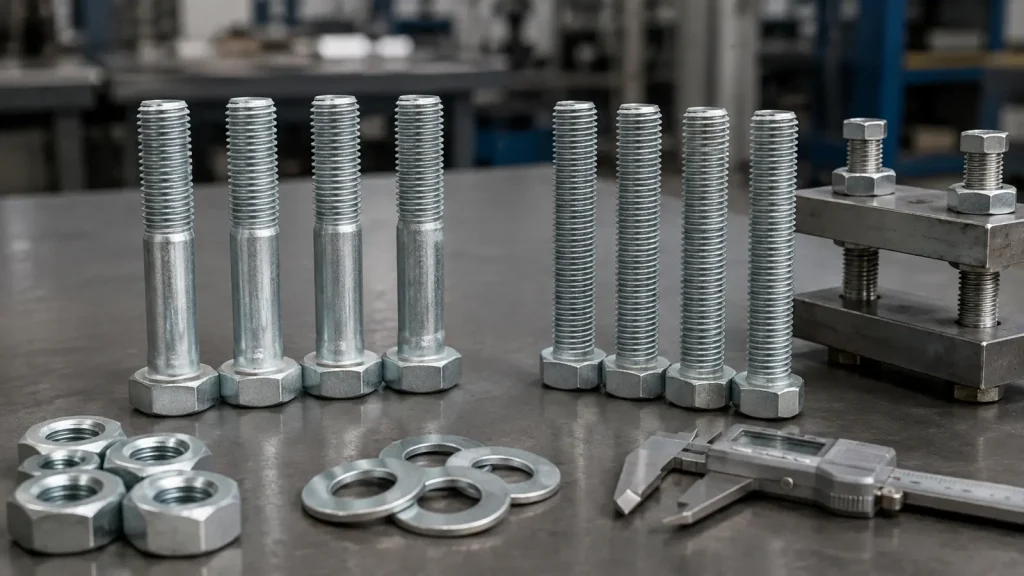
Ribbed bolts are chosen when the shank needs extra grip against rotation or pull movement in a fixed assembly. The key decision is not only thread size; it is where the ribs sit, what material they bite into, and whether the bolt must clamp, locate, or anchor the part.

For purchasing, a clear drawing or sample matters more than a loose name. “Ribbed bolt” can describe several fastener styles, including bolts with serrated, knurled, or longitudinal ribs, so the mating hole, installation method, and finish should be confirmed before ordering.

Related Products

U-bolt ( / U-bolt, M10/M12/M16/M20/M24 multiple specifications)

U-bolt ( / U-bolt, M10/M12/M16/M20/M24 multiple specifications)

Brand: Wotu Surface: natural black oxide / hot-dip galvanized / blue-white zinc plated, multiple processes available Specifications: Based on common industry drawing parameters, suitable for pipe diameter 25mm~139.7mm, screw diameter M10~M24, total length can be nonstandard customized Matching: can be matched with nut, flat washer and spring washer of the same specifications for complete shipment Packaging: Bundling and packaging + 25kg export carton, full-container wooden pallet wrapped with film, supports private-label export packaging

Read More
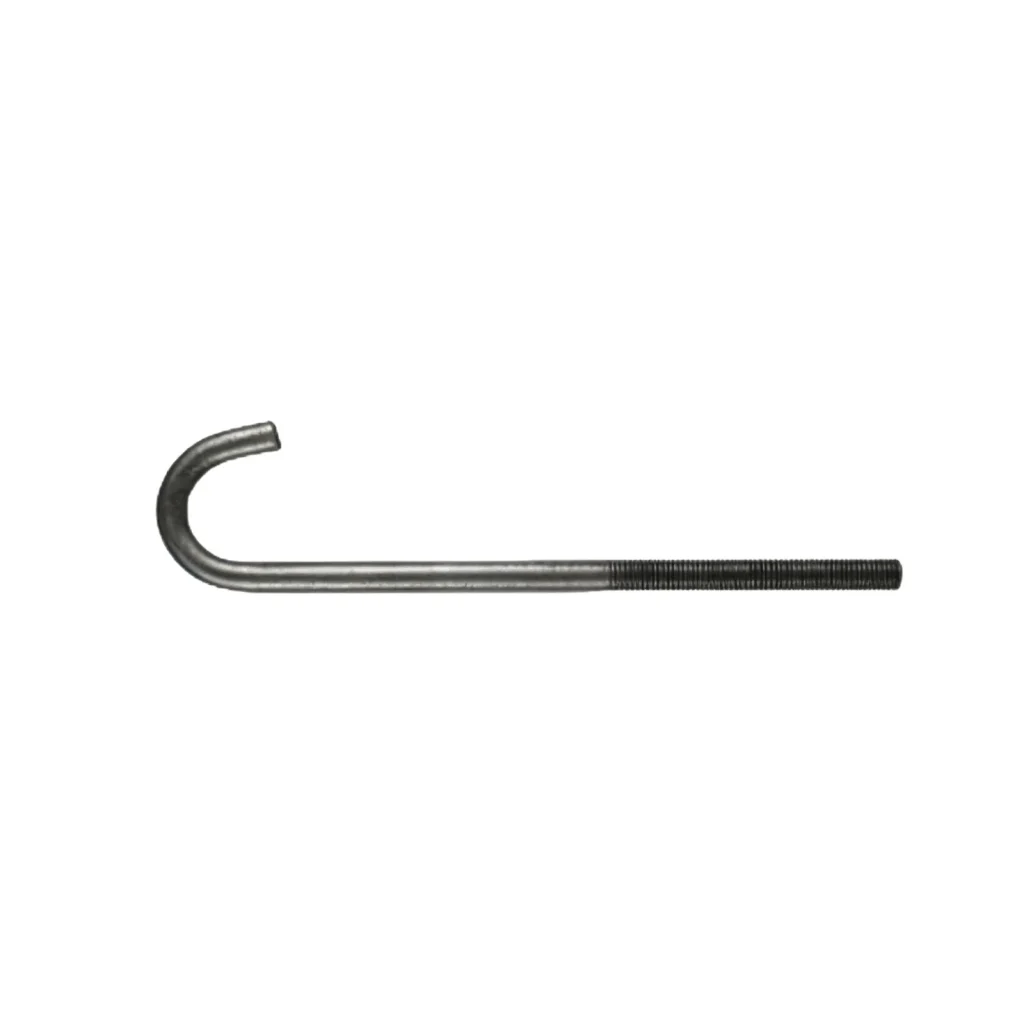
7-letter, 9-letter L-shaped anchor bolt (Chinese national standard GB/T799-1988 embedded anchor screw)

7-letter, 9-letter L-shaped anchor bolt (Chinese national standard GB/T799-1988 embedded anchor screw)

Brand: Wotu Surface: Natural black oxide treatment, customized hot-dip galvanized, zinc plated as required Specifications: Follow Chinese national standard GB/T799-1988, in stock M12-M48, total length 120mm~1500mm, nonstandard customized diameter, bending length, total screw length available Matching: Nuts, flat washers and spring washers of the same specification can be supplied in complete sets. Packaging: Bundling and packaging, using wooden pallets and film-wrapped export packaging in large quantities

Read More
Hex nut DIN934-1987 (A/B accuracy classification)

Hex nut DIN934-1987 (A/B accuracy classification)

Brand: Wotu Standard basis: German standard DIN934-1987, metric coarse thread/fine thread universal thread Surface: 304 stainless steel Specifications: M6~M24 full range of specifications Supporting equipment: same specification bolts, flat washer, spring washer complete set of shipment Packaging: 25kg standard carton, whole wooden pallet packaging

Read More
Hex thin nut

Hex thin nut

Brand: Wotu Surface: zinc plated Specifications: in stock M8~M64 full standard specifications, covering precision, machinery, and steel structure full size range, supporting nonstandard tooth pitch and customized thickness Matching: Can be matched with bolts of corresponding specifications, flat washer, spring washer complete set of shipment Packing: packed in 25kg cartons and packed on wooden pallets.

Read More
Hex nut (Chinese national standard GB52-1976)

Hex nut (Chinese national standard GB52-1976)

Brand: Wotu Surface: 304 stainless steel Specifications: in stock M6~M24 full standard metric specifications, supports nonstandard pitch, thickening/customized Matching: Can be matched with bolts of corresponding specifications, flat washer, spring washer complete set of supporting shipment Packaging: 25kg cartons, whole wooden pallets

Read More
Hex flange nut (Chinese national standard GB/T6177.1-2000)

Hex flange nut (Chinese national standard GB/T6177.1-2000)

Brand: Wotu Surface: zinc plated Specifications: in stockM6/M8/M10/M12/M14/M16/M20 Chinese national standardfull range of specifications, support nonstandard thickness, tooth pitch customized Matching: can be matched with bolts of the same specification, flat washer, spring washer complete set of shipment Packaging: 25kg cartons, whole wooden pallets

Read More

Ribbed Bolt Details That Affect Fit and Installation

Selection points

Useful selection criteria for ribbed bolts include the rib location, head style, thread form, shank length, mating hole condition, material grade, coating, and installation process. These details determine whether the bolt will resist turning, seat cleanly, and maintain the intended clamp load in the finished assembly.

Criterion What To Check Why It Matters Buyer Tip
Rib pattern and grip function Confirm whether the ribs are intended to resist rotation, improve concrete bond, or lock into a mating part. Different rib shapes solve different problems. A bolt that grips well in one assembly may interfere with seating, nut travel, or hole fit in another. Ask: What material will the ribbed section contact, and should the ribs bite, locate, or only add pull-out resistance?
Ribbed section length and position Compare the rib location with the drawing, embedded depth, clamping stack, and any washer or nut clearance. If ribs sit in the wrong area, they can damage the mating surface, prevent proper tightening, or fail to engage where grip is needed. Ask for a marked drawing showing total length, threaded length, ribbed length, and the distance from the head or end to the first rib.
Thread compatibility Verify thread diameter, pitch, tolerance, and whether the nut must pass over any ribbed area during assembly. Ribs near the threaded portion can create assembly problems if the nut, washer, sleeve, or fixture must slide past them. Ask: Will any component need to move over the ribs before final tightening, or are the ribs fully outside the nut path?
Material and surface treatment Confirm the required steel grade or property class, plus coating such as plain, zinc plated, or hot-dip galvanized if corrosion resistance is needed. Material affects strength, while coating affects corrosion behavior, thread fit, and the risk of assembly mismatch with nuts and washers. Ask whether matching nuts and washers must use the same coating and whether post-coating thread fit should be checked.
Application load and installation method Match the bolt design to how it will be installed: cast-in, pressed into a part, used in a fixture, or tightened in a bolted joint. Ribbed bolts used for anchoring, anti-rotation, and general fastening face different loads and failure modes. Ask: Is the main concern pull-out resistance, rotation during tightening, vibration loosening, or alignment during installation?

Choosing Ribbed Bolts for Anti-Rotation, Grip, and Assembly Control

The practical difference is between a ribbed feature used for anti-rotation and one used for anchoring or interference fit. Anti-rotation ribs help stop the bolt from spinning during nut tightening, often in sheet metal, brackets, or pre-punched components. Anchoring ribs or coarse shank features are usually judged by how well they engage the base material and how consistently they install.

This matters because the wrong rib form can damage the hole, reduce seating contact, or make assembly harder. A bolt that grips too aggressively may split or deform a thin component; one with shallow ribs may rotate during tightening and slow production.

Start with the assembly, not the bolt name. Confirm the hole type, hole size tolerance, base material, grip thickness, and whether the ribbed section is pressed in, cast in, embedded, or inserted during final assembly. A rib pattern that works in a thick steel bracket may behave very differently in aluminum, plastic, timber, or concrete-related use.

Separate the thread requirement from the shank requirement. Buyers often specify diameter and thread pitch but miss the ribbed body length, head style, under-head bearing area, and transition between ribbed and threaded sections. Those details affect seating, torque behavior, and whether the nut can clamp the joint without bottoming out or damaging the component.

Choose the surface finish according to exposure and assembly fit. Zinc plating, hot-dip galvanizing, black finish, or other coatings can change both corrosion resistance and dimensional fit. If the ribbed portion is meant to press into a controlled hole, coating thickness and burr control should be discussed before production approval.

Avoid ordering from a photo alone. Send a drawing, standard reference if available, sample part, application notes, and expected installation method. If Hebei Wotu Fastener Manufacturing Co., Ltd. is quoting the part, ask them to confirm the rib shape, material grade, heat treatment if required, finish, inspection points, and packaging method before bulk production.


Criteria Importance Description Example Options
Rib location Critical for fit and function Ribs under the head, along the shank, or near the unthreaded body serve different purposes. The location determines whether the bolt resists rotation, centers the part, or grips the receiving material. A ribbed area close to the head may help stop rotation in a bracket, while ribs along the shank may be intended for a tighter interference fit.
Mating hole condition High impact on installation consistency Hole diameter, tolerance, burrs, thickness, and material hardness affect how the ribs engage. A hole that is too large may not grip; a hole that is too small may deform the part or make assembly difficult. A punched steel hole and a drilled aluminum hole may need different rib geometry even if the nominal bolt size is the same.
Material and strength requirement Important for load-bearing assemblies The bolt material and strength class should match the joint load, tightening method, and working environment. The ribbed feature does not compensate for an underspecified strength requirement. A light positioning fastener and a structural support fastener may look similar but require different material and inspection expectations.
Surface finish Important for corrosion resistance and dimensional fit Coatings can improve corrosion resistance, but they also add thickness and may affect how the ribbed section enters the hole. Finish selection should consider both exposure and assembly tolerance. A thicker protective coating may be suitable outdoors, but the ribbed diameter and mating hole should be checked after coating.
Ribbed bolt versus standard bolt with washer or lock feature Useful trade-off for design review A standard bolt with a washer, lock nut, or serrated flange may be easier to source for some joints, but it may not solve bolt spin during one-sided assembly. A ribbed bolt can improve location or anti-rotation when the receiving part is designed for it. If operators cannot hold the bolt head during tightening, a ribbed shank may be more practical than relying only on a washer or nut-side locking feature.

Product Selection

Related Options

For a bracket, frame, equipment base, or support assembly, the main priority is controlled engagement between the ribbed shank and the receiving material. A suitable ribbed bolt should install without excessive force, hold position during tightening, and match the corrosion and strength needs of the working environment.

Blog Articles / Reviews

Anchor Bolts: 7 Ordering Errors That Cause Site Rework

Anchor Bolts: 7 Ordering Errors That Cause Site Rework

ost anchor bolt ordering errors come from incomplete drawings, unclear dimensions, unsuitable material or coating choices, undefined tolerances, and mismatched nuts or washers. These mistakes affect steel fabricators, EPC contractors, equipment installers, importers, and distributors because anchor bolts are usually embedded before the connected structure arrives on site. Once concrete has cured, even a small […]

Why Do U Bolts Loosen in Pipe Supports? 6 Causes and Prevention Methods

Why Do U Bolts Loosen in Pipe Supports? 6 Causes and Prevention Methods

U bolts usually loosen in pipe supports because the connection loses clamping force, receives continuous vibration, restricts thermal pipe movement, uses an incorrectly sized U bolt, experiences surface settlement, or suffers from corrosion and inadequate inspection. This issue affects EPC contractors, pipe installers, industrial maintenance teams, equipment manufacturers and fastener distributors working with water, oil […]

DIN 931 vs DIN 933 Hex Bolts: What Should Buyers Confirm Before Bulk Ordering?

DIN 931 vs DIN 933 Hex Bolts: What Should Buyers Confirm Before Bulk Ordering?

DIN 931-style half-thread and DIN 933-style full-thread hex bolts should not be selected from diameter and overall length alone. The practical choice depends on the joint stack, required grip, location of the thread transition, available nut engagement, mating hardware, material or property requirement, coating system and governing product specification. A half-thread bolt is not automatically […]

The Widespread Application of Hot-Dip Galvanized Bolts in Daily Life

The Widespread Application of Hot-Dip Galvanized Bolts in Daily Life

Hot-dip galvanized bolts are widely used in daily life, especially due to their advantages, which have led to their rapid development in the market and widespread consumer appeal. So what are the specific advantages of hot-dip galvanized bolts in use? Today, Hebei Wotu Fastener Manufacturing Co., Ltd. will discuss this with you. 1. Due to […]

The Widespread Application of Hot-Dip Galvanized Bolts in Daily Life

The Widespread Application of Hot-Dip Galvanized Bolts in Daily Life

Hot-dip galvanized bolts are widely used in daily life, especially due to their advantages, which have led to their rapid development in the market and widespread consumer appeal. So what are the specific advantages of hot-dip galvanized bolts in use? Today, Hebei Wotu Fastener Manufacturing Co., Ltd. will explain. 1. Due to its special surface […]

Applications of Anchor Bolts

Applications of Anchor Bolts

Fixed anchor bolts, also known as short anchor bolts, are cast in with the foundation and used to secure equipment that does not experience strong vibration or impact. 1. Fixed anchor bolts, also known as short anchor bolts, are cast in with the foundation and used to secure equipment that does not experience strong vibration […]

Frequently Asked Questions

Where are ribbed bolts most useful in an assembly?

They are most useful where the bolt needs to resist turning while a nut is tightened, or where the shank must grip the receiving material before final clamping. Common examples include brackets, frames, supports, and pre-punched parts where access to the bolt head is limited during assembly.

How are ribs different from ordinary threads?

Threads are designed to engage a nut or tapped hole and create clamp load. Ribs are usually on the shank or under-head area and are intended to bite into or locate against the mating material, so they affect installation fit rather than replacing the threaded connection.

Can a ribbed shank be substituted for a standard hex bolt?

Only if the mating hole and installation method are suitable. A standard hex bolt relies mainly on head access, friction, and clamp force, while a ribbed bolt may require a controlled hole size and enough material thickness for the ribs to grip without tearing or distortion.

What is the common mistake when specifying this type of bolt?

A frequent mistake is giving only the thread diameter and length while leaving the ribbed section undefined. The rib height, length, position, and transition to the threaded area can decide whether the bolt seats properly or rotates during tightening.

What information should be sent for a quotation?

Send a drawing or sample, thread size, total length, ribbed section dimensions, head style, material grade, finish, mating material, hole size, and installation method. If the part replaces an existing bolt, photos can help, but they should not replace measured dimensions.

Leave Your Message

Send the drawing or sample details, including thread size, ribbed section length and shape, base material, hole condition, required finish, and how the bolt will be installed.