“Allen bolt” is commonly used for a bolt with a hexagonal socket in the head, but the term alone does not identify the complete product. Confirm whether you need a standard socket head cap screw, a low-head or button-head version, or another socket-drive style. The head geometry affects clearance, tool access and the amount of bearing surface around the joint.
Thread selection also matters. A fully threaded fastener can suit joints where the clamped parts are relatively thin or where thread engagement is needed along most of the shank. A partially threaded design may be preferable when an unthreaded shank must pass through the outer part. Confirm the required thread form and fit rather than relying on the phrase “Allen bolt” alone.
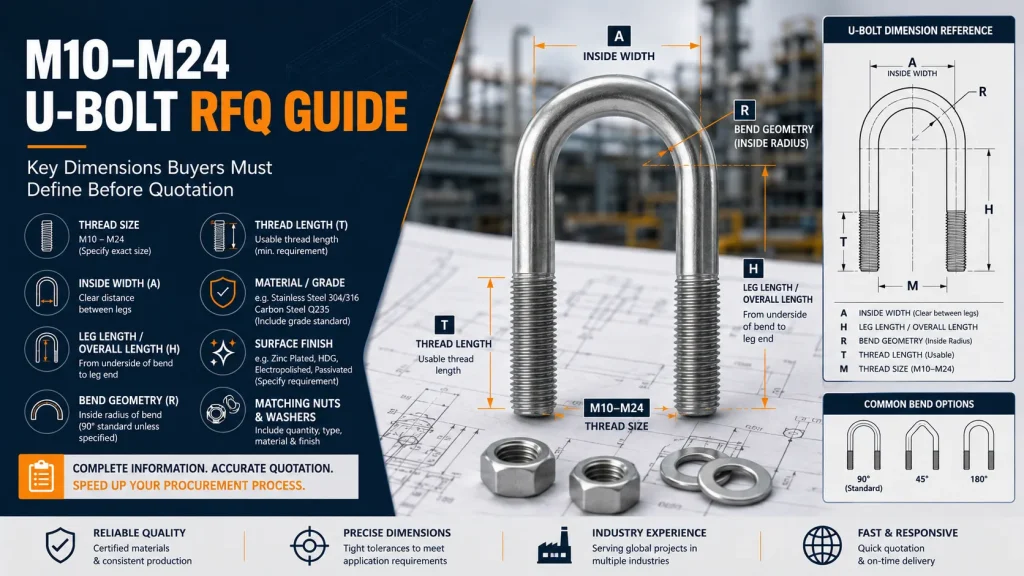
Start with the joint and dimensions. Send the nominal diameter, overall length, thread type, thread length and the material thicknesses being clamped. Check how the length is measured for the selected head style, since a change in head design can alter the installed position. A drawing or sample prevents confusion over diameter, pitch and usable thread.
Choose the head for access, not appearance. A standard socket head generally gives the tool a deeper, more familiar drive area, while button or low-profile heads can fit beneath nearby parts. Recessed drives are useful in confined spaces, but an Allen key still needs enough straight-line access and full engagement. Avoid specifying a smaller head simply because the assembly looks compact.
Match material and surface condition to the environment. Consider load, moisture, chemicals, temperature and contact with dissimilar metals before selecting the bolt material or coating. A coating can support corrosion resistance, but it may also affect thread fit or assembly friction. Ask for the applicable material, property class, finish and inspection information rather than treating a finish name as proof of suitability.
Prevent avoidable ordering errors. Confirm the required quantity, packaging, thread tolerance, head style, drive size and any drawing or inspection requirements in the enquiry. If the bolt will be used in a safety-critical or highly loaded joint, have the design authority confirm the required fastener grade and tightening method. For a quotation, send a part drawing or a clear specification together with the application, installation access and delivery destination.